Babbel has established itself as a language learning platform built around the goal of achieving
real-world conversational competency through structured, practical lessons designed by professional
linguists and language educators. Unlike gamification-heavy language apps that prioritize engagement
mechanics, Babbel emphasizes pedagogically grounded instruction that balances vocabulary acquisition,
grammar integration, pronunciation development, and cultural context within lessons designed to
produce measurable conversational ability. Understanding Babbel’s methodology, its distinctive
approach to practical language instruction, and how it positions itself among language learning
alternatives helps learners evaluate whether this platform aligns with their language learning
goals and study preferences.
⚠ Note: This article provides general information about online learning platforms for
research purposes. We are not teachers, course providers, or learning platforms. Always research platforms
independently, read terms of service, and verify all information before making educational decisions.
Understanding Babbel’s Conversation-First Philosophy
Babbel’s instructional philosophy prioritizes practical conversational skills from the earliest
lessons, focusing on teaching language that learners can use in real-world situations rather than
isolated vocabulary or abstract grammatical rules disconnected from communication contexts. Lessons
are designed to build toward conversational scenarios that reflect genuine interactions such as
ordering food in a restaurant, asking for directions, introducing oneself in professional settings,
discussing daily routines, making travel arrangements, and navigating common social situations in
the target language. This practical orientation ensures that learning time translates directly into
communication capability that learners can use during travel, professional interactions, or social
engagement with speakers of the target language.
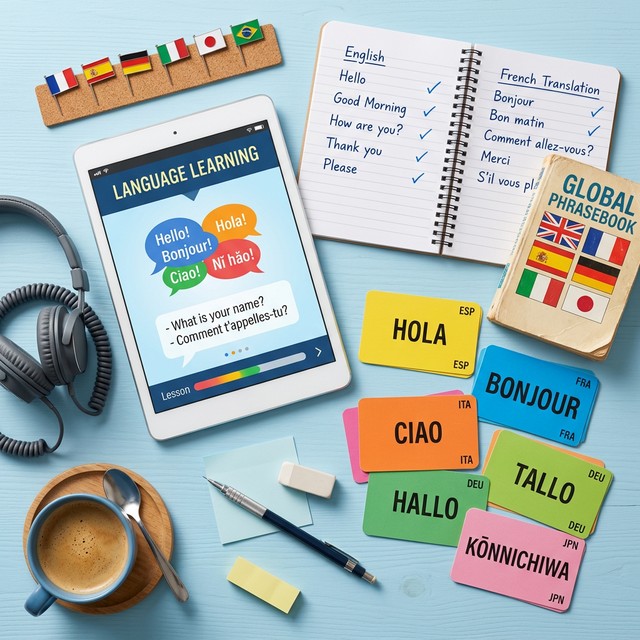
The conversation-first approach is designed by teams of professional linguists, language teachers,
and educational designers who bring formal expertise in language acquisition theory and pedagogy to
the course development process. This professional development methodology distinguishes Babbel from
platforms that rely primarily on algorithmic content generation or community-created content. Each
lesson is crafted to introduce new language elements within meaningful communicative contexts,
ensuring that vocabulary lessons teach not just individual word meanings but also how those words
function within natural sentences, common phrases, and realistic dialogue exchanges. Grammar
instruction is integrated into conversational contexts rather than presented as abstract rules,
helping learners understand how grammatical structures serve communication goals in practical use.
Expert-Designed Curriculum Structure
Babbel’s curriculum for each language follows a structured progression designed by language education
professionals who understand how adults acquire new languages most effectively. The curriculum builds
from foundational communication skills through increasingly complex language use, with each level
designed to expand the learner’s communicative Range systematically. Course content introduces
vocabulary, phrases, grammatical structures, and cultural information in sequences that research
suggests optimize adult language learning, respecting the cognitive patterns and learning challenges
specific to adult learners who approach language acquisition differently than children learning
their first language. This expert-designed approach aims to make learning time as efficient as
possible, minimizing wasted effort on activities that do not contribute meaningfully to
communication skill development.
Lesson Format and Learning Activities
Babbel’s lessons employ multiple activity types designed to develop different aspects of language
competency within structured, efficiently designed learning sessions.
Practical Dialogue and Contextual Exercises
Lessons center on realistic dialogue scenarios where learners encounter new vocabulary and grammar
within natural conversational contexts. Rather than presenting word lists for memorization, Babbel
introduces new language through dialogues that model real conversations, allowing learners to
understand how language functions in communication before practicing individual elements. Exercises
require learners to construct their own responses within conversational frameworks, developing active
language production skills rather than only passive recognition. This contextual approach helps
learners develop intuitive understanding of when and how to use specific language elements in
appropriate situations, building pragmatic competence that isolated vocabulary and grammar study
cannot provide effectively.
Integrated Grammar Instruction
Unlike platforms that either avoid grammar entirely or treat it as separate from practical
communication, Babbel integrates grammar instruction directly into conversational lessons. When
a lesson introduces a new grammatical structure, it does so within a communicative context that
demonstrates how that grammar enables specific types of communication. Brief, clear grammar
explanations in the learner’s native language accompany practical examples, providing the explicit
understanding that many adult learners need to efficiently grasp grammatical patterns while connecting
those explanations to practical use. This integration of explanation with application helps learners
understand grammar as a tool for communication rather than as an abstract set of rules to memorize.
For adult learners who benefit from understanding the logic behind language structures, this approach
is often more effective than purely intuitive methods that expect learners to discover patterns
without explicit guidance.
Pronunciation and Speech Recognition
Babbel incorporates speech recognition technology that allows learners to practice pronunciation
within lessons and receive automated feedback on their spoken language. The pronunciation component
addresses a critical language skill that text-based and translation-based exercises cannot develop.
By comparing learner speech patterns against native speaker models, the system provides feedback
that helps learners identify and correct pronunciation issues that might impede comprehension by
native speakers. Pronunciation practice is integrated into lessons alongside vocabulary and grammar
work, ensuring that speaking skills develop in parallel with other language competencies rather
than being treated as a separate, optional component. While automated speech recognition cannot
match the nuanced feedback of human conversation partners, it provides an accessible, always-available
practice mechanism that helps learners develop speaking confidence and pronunciation awareness.
Review and Spaced Repetition
Babbel implements a review system based on spaced repetition principles that systematically revisits
previously learned material at intervals optimized for long-term memory retention. This review
mechanism addresses one of the greatest challenges in language learning: retaining learned material
over time without constant deliberate review. The system tracks which vocabulary, phrases, and
grammatical structures each learner has studied and schedules review sessions that present previously
learned material at intervals calculated to reinforce memory just before forgetting is likely to
occur. Regular review sessions ensure that earlier learning is consolidated and maintained while
new material is being acquired, preventing the common frustration of forgetting previously learned
content as study progresses to new topics.
Language Coverage and Course Depth
Understanding which languages Babbel supports and the depth of available course content helps
learners assess whether the platform meets their specific language learning needs.
Available Languages
Babbel offers courses in a focused selection of languages, concentrating on languages with large
learner demand rather than attempting to cover dozens of languages with potentially thinner content.
The available languages typically include major European languages such as Spanish, French, German,
Italian, Portuguese, and others that represent common learning targets for Babbel’s primary user
base. Course content depth and comprehensiveness may vary between languages, with some receiving
more extensive curriculum development than others. Learners should verify current language
availability and confirm that their target language is supported with sufficient course content for
their learning goals before subscribing.
Beginner Through Intermediate Coverage
Babbel’s curriculum typically covers beginner through intermediate proficiency levels, providing
comprehensive instruction that takes learners from zero knowledge through increasingly complex
conversational capability. The depth of intermediate-level content varies by language, and learners
targeting advanced proficiency should evaluate whether the platform provides sufficient content
above the foundational levels. For learners at the beginner stage, Babbel provides a particularly
strong foundation by combining practical communication skills with grammatical understanding that
prepares them for continued advancement through other resources when they outgrow the platform’s
content scope.
Pricing and Subscription Model
⚠ Note: Platform pricing, features, and course offerings change frequently. All
information should be verified directly with platforms before making decisions.
Babbel operates on a subscription model with various plan durations that affect per-month pricing.
Subscription Options
Subscription plans typically offer access to one language’s complete course content for the duration
of the subscription, with longer commitment periods generally reducing the effective monthly cost.
Some subscription options may include access to multiple languages at different price points. The
platform may also offer lifetime access plans at premium price points for learners committed to
long-term study. Free trial periods, when available, allow prospective subscribers to experience
the lesson format and evaluate whether Babbel’s approach suits their learning preferences before
committing financially. Learners should verify current pricing, plan options, and available features
directly with the platform, as these details are updated periodically.
Value Assessment Considerations
Evaluating Babbel’s subscription value relative to free alternatives and other paid platforms
requires considering the quality of pedagogical design, the efficiency of learning time, and the
practical communication outcomes achieved. While free language learning tools provide cost-free
access, the effectiveness of learning time spent matters significantly for adult learners with
limited study time available. If Babbel’s expert-designed curriculum produces faster communication
skill development than less structured alternatives, the subscription cost may represent good value
for learners who prioritize practical outcomes and efficient learning over minimal financial outlay.
Comparing Babbel with Other Language Learning Tools
Understanding how Babbel positions itself among language learning alternatives helps learners select
the most appropriate tools for their specific goals and learning circumstances.
- Pedagogical Approach: Babbel’s expert-designed, conversation-focused curriculum contrasts
with gamified apps that prioritize engagement metrics and immersion-only methods that avoid
native language explanation, offering a more structured, educationally grounded approach. - Grammar Integration: Babbel provides explicit grammar instruction within communicative
contexts, which differs from platforms that either ignore grammar entirely or treat it as
separate from practical communication, offering adult learners the explicit understanding many
find helpful. - Practical Focus: The emphasis on real-world conversational skills and common communication
scenarios sets Babbel apart from tools focused on vocabulary memorization or translation
exercises disconnected from practical communication contexts. - Content Quality: Expert-designed curriculum from professional linguists and educators
provides a quality assurance level that may differ from community-sourced or algorithmically
generated content on other platforms.
Strengths and Distinctive Advantages
Babbel offers specific strengths that serve certain learner types and learning objectives
particularly well.
Efficient Adult Learning Design
Babbel’s lesson design recognizes that adult language learners typically have limited study time,
specific communication goals, and cognitive approaches to learning that differ from children.
Lessons are designed to be completable in ten to fifteen minute sessions, making regular study
feasible even for busy professionals. The structured, efficient approach maximizes the communication
value extracted from each study session, respecting adult learners’ time constraints while
maintaining pedagogical rigor. This efficiency-focused design serves professionals, travelers,
and other adults who need practical language skills but cannot dedicate hours daily to language study.
Cultural Context Integration
Babbel integrates cultural information and context into language lessons, helping learners understand
not just the language but the cultural norms, social conventions, and communication expectations
associated with the target language community. This cultural dimension enriches language learning
by providing awareness of when certain expressions are appropriate, how politeness levels vary in
different social situations, and how cultural context influences language use. Cultural competence
is an essential component of genuine communication ability that purely mechanical language
instruction often neglects.
Potential Limitations and Considerations
Understanding Babbel’s limitations helps learners develop realistic expectations and plan
supplementary learning activities where needed.
Language Selection Limitations
Babbel’s focused language selection, while ensuring quality for available languages, means that
learners of less commonly studied languages may not find their target language available on the
platform. Asian languages, African languages, indigenous languages, and many other language families
may have limited or no representation, limiting the platform’s utility for learners of these
languages who must look elsewhere for appropriate instruction.
Advanced Level Ceiling
Babbel’s content may not extend sufficiently beyond intermediate levels for learners targeting
advanced or near-native proficiency. Learners who advance quickly or who begin with some prior
knowledge may exhaust the available content for their target language before achieving their desired
proficiency level, necessitating transition to other resources for continued development. This
ceiling is a common characteristic of app-based language learning and does not reflect a quality
deficiency but rather the scope limitations inherent to the platform format.
Interactive Conversation Practice
While Babbel’s speech recognition provides valuable pronunciation practice, it cannot replicate
the adaptive, unpredictable nature of genuine conversation with human speakers. Developing true
conversational fluency requires regular practice with human conversation partners who respond
naturally and present the kind of communicative challenges that automated systems cannot simulate.
Learners should plan to supplement Babbel’s structured instruction with conversational practice
through language exchange programs, tutoring services, or social opportunities with target language
speakers to develop well-rounded communicative competence.
Conversation Simulation and Real-World Language Application
Babbel’s conversation practice features simulate realistic dialogue scenarios where learners
practice responding to prompts in contextually appropriate ways, developing the communicative
flexibility needed for real-world language use beyond memorized phrases. These dialogue
exercises present scenarios including making restaurant reservations, negotiating prices while
shopping, describing symptoms to healthcare providers, discussing work projects with colleagues,
and navigating social situations with appropriate formality levels. By embedding vocabulary and
grammar within authentic communication contexts rather than presenting them as isolated learning
items, Babbel develops practical language readiness that transfers more effectively to genuine
communicative situations.
Business language modules target professional communication needs including formal email
writing conventions, meeting participation language, presentation delivery phrases, phone
call and video conference communication patterns, and workplace social interaction norms
specific to cultures where the target language is spoken. These professionally oriented modules
serve working professionals who need to communicate in a second language for career purposes
and require not just general language competency but specific professional register vocabulary
and communication conventions. Cultural context notes embedded throughout lessons explain
social customs, etiquette expectations, and communication norms that affect how language
choices are perceived in different cultural contexts, helping learners avoid culturally
inappropriate language use despite grammatically correct expression.
Babbel Live Online Tutoring Sessions
Babbel Live supplements self-paced courses with small-group online classes led by qualified
language teachers, providing interactive speaking practice, real-time grammar correction, and
personalized feedback that self-study exercises cannot replicate. These live sessions are
organized by proficiency level and topic, ensuring appropriate difficulty matching and relevant
conversational practice for each participant’s current language development stage.
Making an Informed Decision About Babbel
Evaluating Babbel involves considering several important factors:
- Communication Goals: Assess whether your primary goal is practical conversational ability,
which aligns well with Babbel’s methodology, or whether other goals such as academic language
study, technical language, or literary comprehension might be better served by different
resources. - Language Availability: Verify that your target language is available on the platform with
sufficient course depth for your current and projected proficiency level needs. - Learning Preferences: Consider whether you prefer structured, expert-designed lessons
with integrated grammar explanation, or whether you thrive with more gamified, discovery-based
approaches to language learning. - Time Constraints: Evaluate whether Babbel’s efficient, short-session lesson design
matches your available study time and daily schedule constraints. - Supplementary Planning: Plan how you will supplement Babbel with conversational practice,
cultural immersion, advanced resources, and other tools needed for comprehensive language
development beyond what any single platform provides.
Conclusion
Babbel offers an educationally grounded, conversation-focused approach to language learning designed
by professional linguists and educators for adult learners seeking practical communication skills.
The platform’s integration of vocabulary, grammar, pronunciation, and cultural context within
practical conversational scenarios provides efficient, communication-oriented instruction that
serves structured learners well. As with all language learning tools, Babbel works best as part
of a broader learning strategy that includes human conversation practice and cultural exposure.
Verify current language availability, subscription options, and course content directly with the
platform before making decisions.
What has been the most effective method in your language learning journey? Share your experiences
with structured language courses and conversation practice in the comments to help fellow learners!